Industry
Part of Planning a tea collection starts from consumption, not a wish list
What decides a tea list on a bar menu is the service window, not flavor
The operational filters that decide a tea list on a cafe or bar menu: service windows, kettle settings, milk and ice, and the steps for costing a cup by serving.
What to take away
- A tea list on a menu is chosen by operational constraints first and by flavor second. That is not cynicism, it is arithmetic.
- Anything that has to survive a service window, milk, ice or a shaker is a different product decision from anything sold by the cup.
- Consumer research on tea-based drinks shows buyers care about ingredients they can name and mostly ignore the base tea.
- The list that works is short, priced by cost per serving, and built so staff can make every item the same way twice.
The constraints that pick the list
No cafe picks a tea because it is interesting. It picks one a part-time employee can brew correctly during a rush, that holds up while it sits on a table, and that does not lose money at the price the menu can carry.
Constraints vs what they rule out
Constraint
- One kettle temperature
- Delicate green tea
- Ninety-second service window
- Multi-steep formats
- No scale at the station
- Precise dosing
- Milk and ice on menu
- Light, low-body teas
- Grinder-free prep area
- Extra equipment needs
Ruled out
- One kettle temperature
- Ninety-second service window
- No scale at the station
- Milk and ice on menu
- Grinder-free prep area
| Constraint | What it rules out |
|---|---|
| One kettle temperature | Delicate green tea, unless a second setting exists |
| Ninety-second service window | Multi-steep formats |
| No scale at the station | Anything needing precise dosing |
| Milk and ice on the menu | Light, low-body teas |
| Single grinder-free prep area | Anything requiring extra equipment |
Every item that survives that filter is a candidate. Everything else is a special, not a list item.
What buyers actually notice
A choice experiment on milk tea shows how little of the leaf story reaches the customer. Consumers responded positively to tea bases from established tea companies but barely attended to the type of tea base itself, while reacting negatively to non-dairy creamer compared with a fruit base. New brands undermined their evaluation of the product.
That is one market and one category. Do not generalize it to a straight cup of oolong. The pattern is worth planning around: named ingredients people recognize move the decision.
Fine distinctions in the tea usually do not, unless someone explains them. What it takes for a tasting term to mean the same thing to two people is set out in where tea tasting vocabulary comes from.
Milk and blended drinks are their own problem
A tea sold with milk is a different handling problem. Dry tea keeps on a shelf; milk does not. Extension guidance notes that Grade A milk must by law be held at 45 F or below, that refrigeration is the single most important factor in keeping it safe, and that properly refrigerated it lasts about two weeks.
A tea that tastes excellent plain can be flattened by milk. The only way to know is to test the actual serve.
Test every candidate the way it will be sold: in a takeaway cup with the lid on, over ice, with whatever milk the shop stocks. A tasting at the bar with no lid tells you little about what the customer gets.
Costing a list item
- Weigh the real dose, not the intended one. Staff pour heavy.
- Divide wholesale price per kilogram by servings for cost per cup.
- Add wastethe pot that sat too long, the brew nobody ordered.
- Check the resteep. Some teas fund a second serving; most do not.
- Reprice when the harvest changes. The same name is a different lot.
Where the list should come from
Buy from suppliers who date their lots and will sell a small quantity first. A set without harvest dates cannot rotate. A cafe that cannot rotate serves its oldest tea.
How sets are put together is in how independent makers produce tea collections. The rotation arithmetic works the same behind a counter as at home, described in planning tea collections: the steps that matter.
Common questions
How many teas should a menu carry?
Four to six for most cafes. One black, one green, one herbal infusion, one interesting item, plus whatever the iced program needs.
Should staff be trained on origin?
Train them on two sentences per tea and on making it consistently. Consistency sells more tea than provenance stories do.
Bags or loose leaf behind the counter?
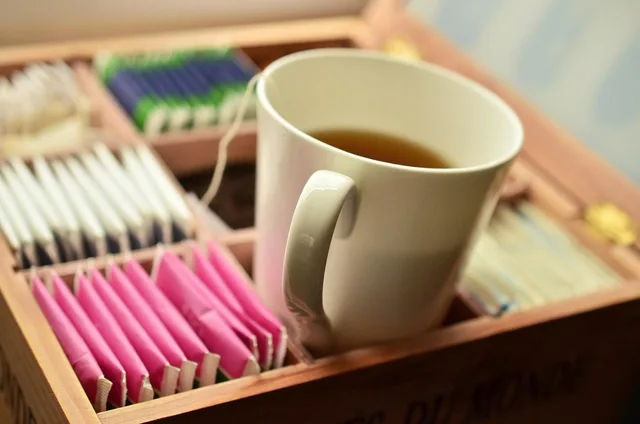
Whole-leaf sachets are the honest compromise for a busy bar. They dose themselves, they brew acceptably, and they remove the single biggest source of variation.
How do I price against a coffee menu?
On cost per serving and time at the station, not on what tea costs elsewhere. A pot that occupies a table for an hour is priced differently from a cup that leaves.