Reviews
Part of Ritual, not invention: what real case-study research says about a tea habit
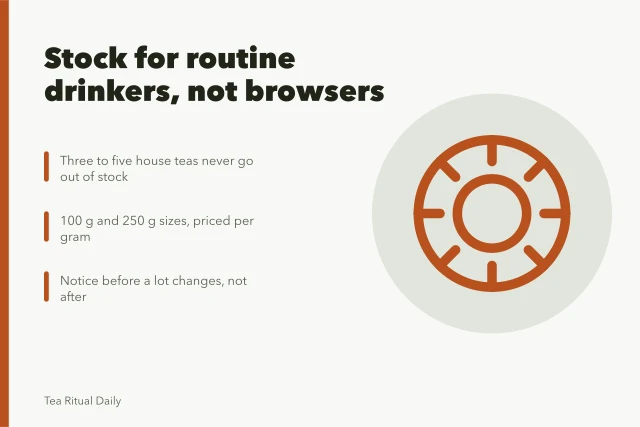
Buy for consistency, not novelty, when stocking a tea ritual
Buying for a routine means size, availability and consistency before novelty. How much to buy, when to reorder, and the one category worth buying deep.
What to take away
- Buying for a routine is a different problem from buying for curiosity. Size, availability and consistency come first.
- One house tea plus one rotating slot covers almost everyone. Two house teas if you drink at different times of day.
- Dark tea is the one category where buying several years at once is defensible, and the aging literature is specific about what changes.
- Growing conditions produce measurable differences in taste, which is why a lot change is a real change and not your imagination.
Buy for the slot, not for the shelf
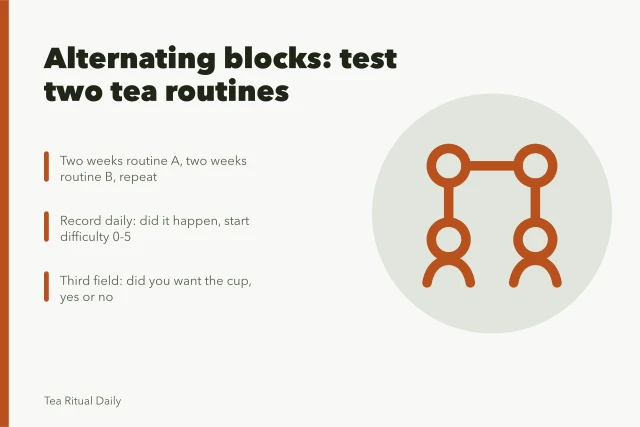
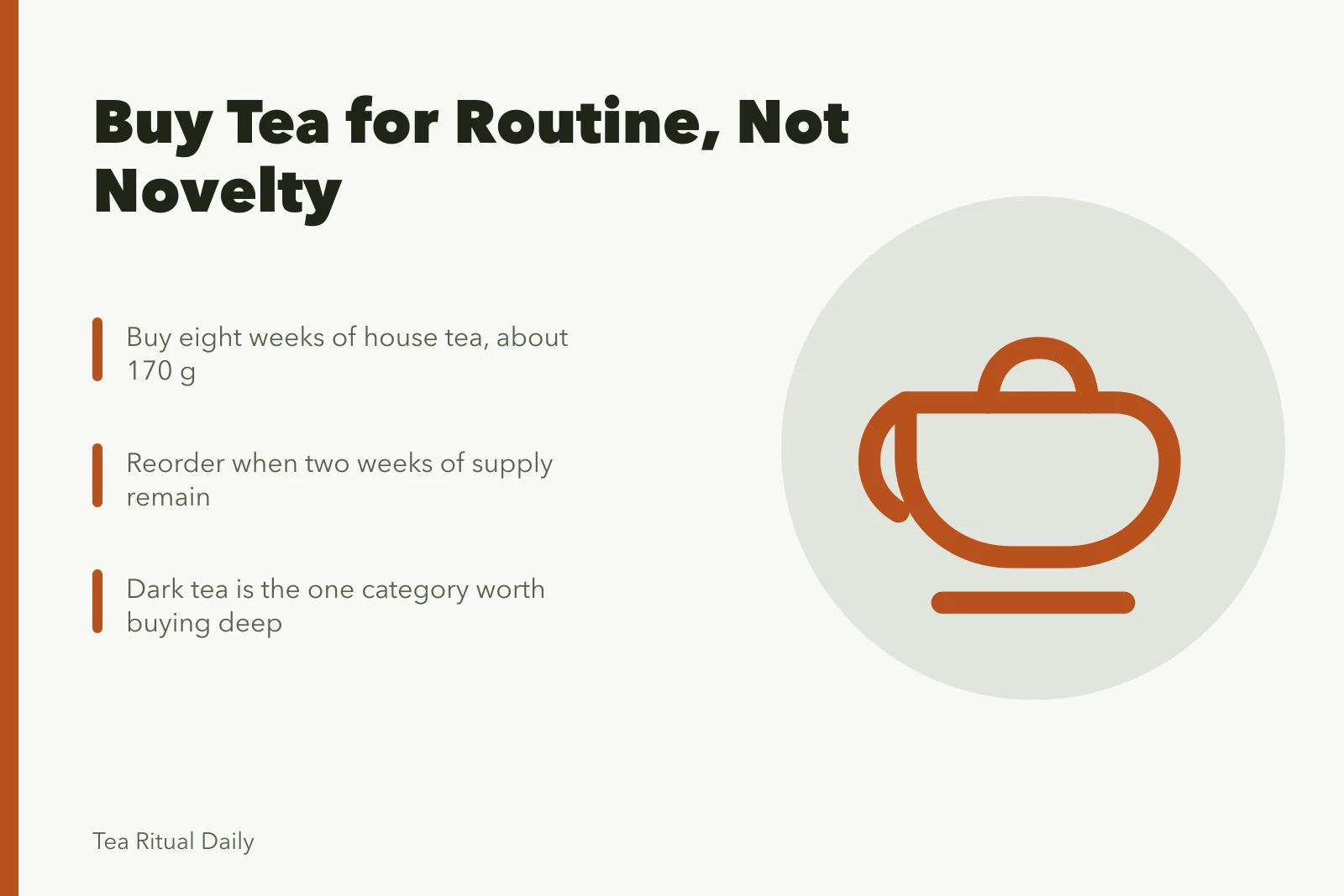
Work out how many grams a week the routine consumes, then buy eight weeks of it. If two routines are still in play, an alternating block over eight weeks settles which one to buy for.
Purchase slots and cadence
Slot
- House tea
- 8 weeks of use
- Second house tea
- 8 weeks of use
- Rotating slot
- 25 g
- Dark tea for keeping
- Whatever you like
Size
- House tea
- Reorder at 2 weeks left
- Second house tea
- Same
- Rotating slot
- Whenever
- Dark tea for keeping
- Rarely
Cadence
- House tea
- Second house tea
- Rotating slot
- Dark tea for keeping
For one cup a day at 3 g, that is about 170 g. Buying 500 g because it was cheaper per gram means drinking the last third after it has flattened.
Buy for the slot
| Purchase | Size | Cadence |
|---|---|---|
| House tea | 8 weeks of use | Reorder at 2 weeks left |
| Second house tea | 8 weeks of use | Same |
| Rotating slot | 25 g | Whenever |
| Dark tea for keeping | Whatever you like | Rarely |
Consistency is the buying criterion nobody lists
For a routine, a tea that tastes the same next time matters more than a tea that scores higher once. That argues for buying from sellers who name the lot, tell you when it changes, and carry the same style year after year.
Expect genuine differences between lots; growing conditions leave a mark. A study compared high mountain tea with lower-grown material. The high-grown samples were high in freshness and sweetness and low in bitterness and astringency.
This was attributed to higher soluble sugar, non-ester catechins and sweet free amino acids, plus lower caffeine and tea polyphenols. The study identified eight aroma compounds behind the tender, green and slightly chestnut character.
When a new lot of your house tea tastes different, that is usually what happened. Ask what changed rather than assuming the tea got worse.
The one category worth buying deep
Dark tea is the exception to every rule about buying small. A study of Anhua Qianliang tea aged from 2 to 25 years found that prolonged storage reduced total polyphenols, free amino acids and most catechins while alkaloids stayed relatively stable.
Sensory evolution tracked coordinated changes across catechins, phenolic acids and amino acid related compounds.
If you drink dark tea daily, buying more than you need this year is reasonable, because it is meant to change. For everything else, buying deep is buying a worse average cup. Anything held that long becomes a storage problem, and in a warm humid house the monthly check is that dry leaf should snap rather than bend.
The checklist for a routine purchase
- Is it in stock in the size you need, reliably?
- Does the seller date each lot?
- Will they tell you before the lot changes?
- Is the price per gram stable enough to plan around?
- Can you buy it again in eight weeks?
Any no on the first four means the tea is a curiosity, not a house tea. That is fine, as long as you know which you are buying.
The full cost arithmetic behind this is in specialty teas: costs, budgets and hidden expenses, and the routine the purchase is feeding is described in lessons from real-world tea ritual case studies.
Common questions
How many house teas should I have?
One or two. More than two and none of them turns fast enough to stay fresh.
Should I buy a year of my favorite tea?
Only if it is a dark tea. For everything else, buy eight weeks and reorder.
What if my house tea is discontinued?
Buy a final batch sized to your reorder cycle, not to your fear, and start testing replacements immediately.
Is it worth paying more for a house tea?
Up to a point. You are drinking it every day, so a small price difference is a large annual one. Test it blind before committing.