Features
Tea Subscription Boxes for Ritual Drinkers: What to Check Before You Commit
Compare tea subscription boxes for ritual drinkers: cadence, portion size, skip and cancel terms, origin, equipment, and freshness checks before you commit.
Tea Subscription Boxes for Ritual Drinkers: What to Check Before You Commit
What to take away
- A tea subscription works as a ritual tool when cadence matches how often you brew.
- Check grams per shipment, leaf format, and whether the box lets you skip or pause.
- Read the tea subscription cancellation policy before your first payment.
- Origin, customs rules, and certification labels affect freshness and value.
- Treat the first month as a trial, not a long commitment.
Match Box Cadence to Your Ritual
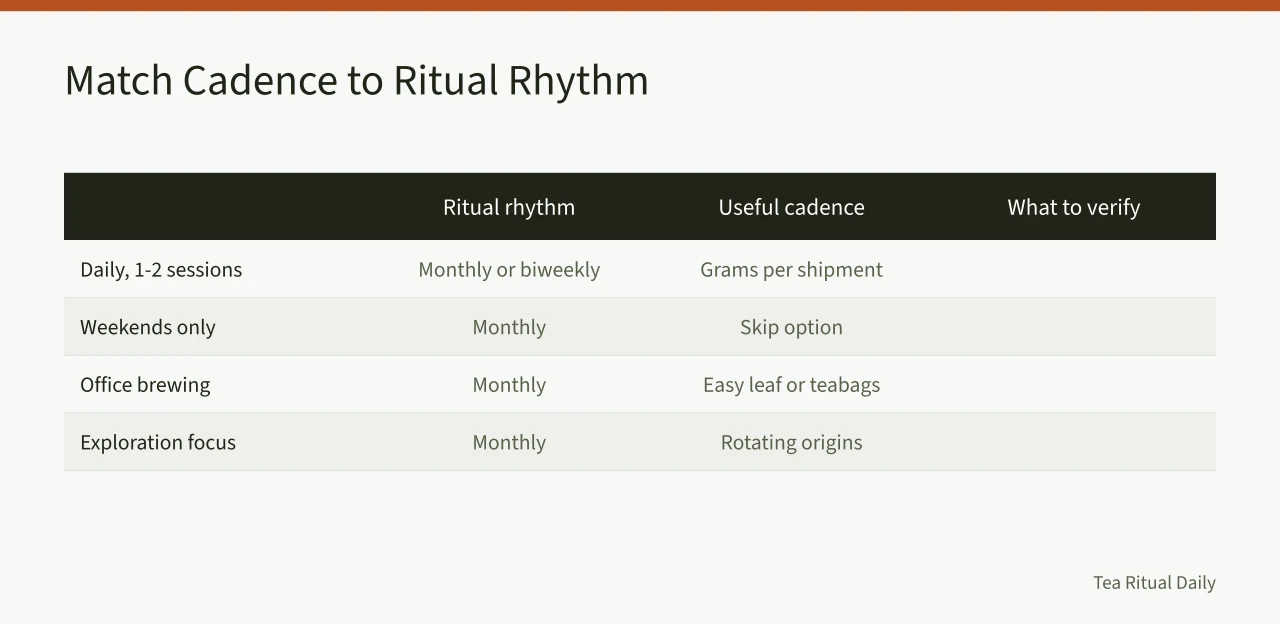
Ritual drinkers brew on a rhythm. A daily gongfu session burns more leaf than a weekend pot. A monthly tea subscription can overwhelm a casual brewer. A weekly or biweekly box may suit a steady habit.
The right cadence depends on grams per session. Weigh your typical dose. Ten grams per day means about 300 grams monthly. That figure helps you judge whether a box is a supplement or your main supply.
Useful cadence
- Daily, 1 to 2 sessions
- Monthly or biweekly
- Weekends only
- Monthly
- Office brewing
- Monthly
- Exploration focus
- Monthly
What to verify
- Daily, 1 to 2 sessions
- Grams per shipment, repeatability
- Weekends only
- Skip option, storage advice
- Office brewing
- Easy leaf or teabags, steep time
- Exploration focus
- Rotating origins, tasting notes
Portion Size and Leaf Format
Portion size decides value. A box may list 50 grams or 100 grams. That weight is more useful than a count of pouches. Loose leaf takes more space per gram than teabags.
Leaf format affects brewing. Whole leaf rewards a gaiwan or basket infuser. Broken leaf and fannings steep faster. Check the listing for origin, harvest, and caffeine guidance. The Wikipedia article on tea brewing explains water temperature and steeping variables.
Skip, Pause, and Cancel Terms
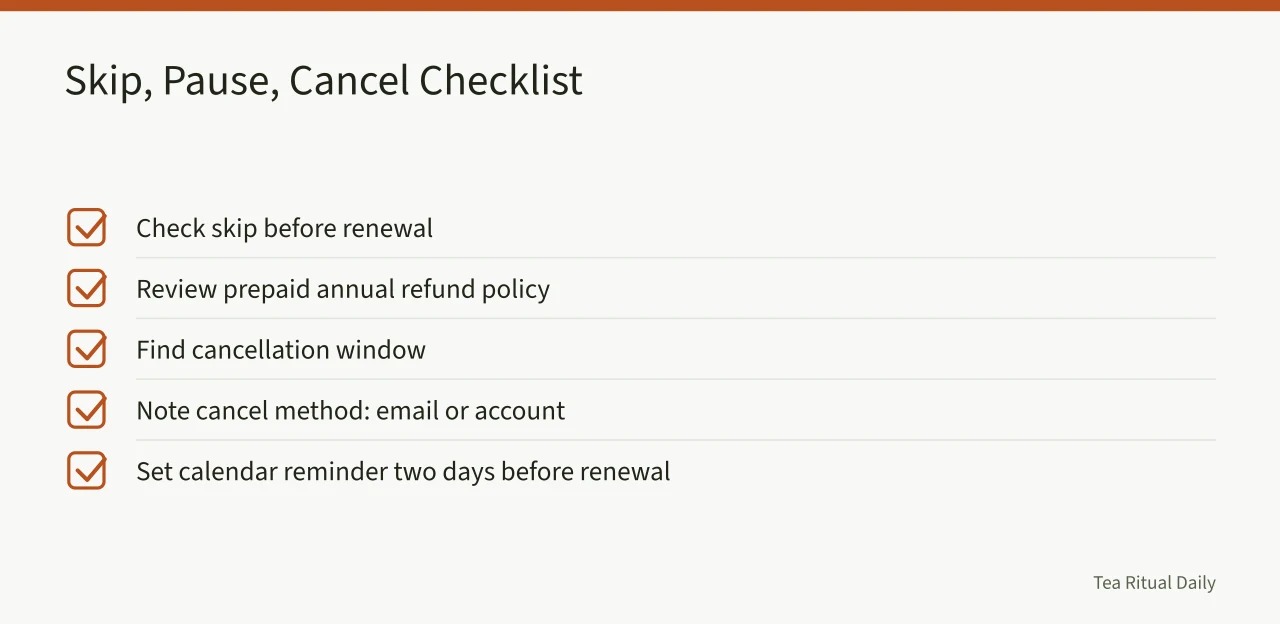
Skip and pause terms matter more than the first box discount. A plan that allows a skip before renewal protects you from leaf piles. A prepaid annual plan may not refund partial months. Look for the cancellation window.
Check whether you cancel by email, account page, or deadline. Some services renew on the same day each month. Set a calendar reminder two days before renewal.
A box you cannot pause is a bill you must plan around.
Example: A Four-Week Trial Plan
Four-Week Trial Plan
- Choose one monthly tea subscription with a clear skip policy.
- Brew every tea three times before judgingshort, medium, long.
- Record grams used, water temperature, and minutes.
- At day 28, decide to keep, pause, or cancel.
Check Origin and Certification Claims
Origin affects freshness and flavor. A Nepal spring lot tastes different from a Ceylon estate. American growers now sell small lots. The Wikipedia overview of tea in the United States covers regions and growers relevant to domestic leaf.
If a box leans on eco claims, read our guide to what USDA Organic verifies on tea labels.
If you order from Canada or Japan, customs and parcel handling change the math. Read our guide to cross-border tea shopping US rules before you commit to an international box.
Subscription Providers and Plan Shapes
Tea Runners, Atlas Tea Club, Simple Loose Leaf, and Plum Deluxe are common names in the monthly tea subscription market. Each plan shape differs. Some send fixed curated boxes. Others let you choose categories like black, green, or herbal.
Compare whether they send single origin lots or blends. A single origin lot helps you learn a region. A blend can be pleasing but hard to compare across months. The listing should state net weight and harvest.
Ask if the plan repeats teas. Repetition can be fine for a daily drinker. For an explorer, rotation matters more. Many services post past boxes online.
Equipment That Earns Counter Space
A subscription box only pays off if you can brew the leaf well. A variable temperature kettle helps green and white tea. A gooseneck kettle gives a slow, steady pour for small vessels. The Wikipedia article on kettles covers gooseneck and standard designs.
Check the voltage if you buy a kettle abroad. North American outlets use 120 volts. A foreign 220 volt kettle may need a converter. Safety standards apply to electric appliances. Use a model with an automatic shutoff.
Shipping and Storage Basics
Tea fades with air, light, heat, and moisture. A subscription box should arrive in sealed foil or a lined pouch. Once open, move leaf to a small airtight tin. Keep it away from spices and coffee.
Shipping speed matters for green and white tea. Long transit can flatten aroma. If a box ships from overseas, check tracking and courier fees. These details affect the freshness you actually taste.
How to Read a Tea Subscription Box Listing
How to Read a Listing
- Net weight in grams
- Harvest year or packaging date
- Origin and garden or region
- Leaf grade and format
- Caffeine guidance
- Skip, pause, and cancel terms
- Shipping origin and return policy
Compare Cadence and Cost per Gram
Cost per gram is a better comparison than box price. Divide the total price by net weight. Then compare with a local tea shop. A box with 50 grams at a low price may still be poor value if the leaf is broken.
Ritual drinkers should also count shipping. Free shipping thresholds can change the math. A monthly tea subscription with free shipping may beat a cheaper box with added fees.
Use the same leaf type for comparison. A white tea and a roasted oolong differ in density. Weight is the common measure.
Gifts and Shared Boxes
Not every tea lover wants a subscription. A one-time gift set can test a new origin without renewal terms. Our guide names five US loose leaf gift sets under $50, including Rishi, Smith, Adagio, Harney and Art of Tea.