Reviews
Loose leaf tea comparison: match shape to your brew
A loose leaf tea comparison by shape and size: see which named leaf forms suit a mug basket, gaiwan, or teapot, and decode common grade labels.
What to take away
- Buying twice usually means the first purchase was too large, too old, or the wrong shape for how you actually brew.
- Composition varies enormously inside a single origin and style, so the name on the bag predicts less than people assume.
- Caffeine in the dry leaf spans a wide measured range even within one region, so any single figure you are quoted is a guess.
- Doses are ratios. Once you think in grams per 100 mL, every recommendation becomes comparable.
Match the leaf shape to how you brew
A useful loose leaf tea comparison starts with the format you will use tomorrow morning: which format matters more than a grade label. A mug and infuser basket suits leaf that opens and brews readily; a small pot or gaiwan with short steeps suits tightly rolled leaf that unfurls over repeated infusions.
Match Leaf Shape to Brewing
Mug and basket
- Leaf shape
- Open, medium-size leaf
- Extraction speed
- Fast
- Best for
- One good cup
Small pot
- Leaf shape
- Tightly rolled or twisted
- Extraction speed
- Slow, unfurls over rounds
- Best for
- Several short steeps
Large pot
- Leaf shape
- Consistent grade
- Extraction speed
- Holds four minute steep
- Best for
- Serving a table
Cold and iced
- Leaf shape
- Whole leaf, lightly oxidized
- Extraction speed
- Slow, gentle
- Best for
- Cold brew and batch
Buy the wrong shape for your habit and the tea underperforms every time, and you conclude it was bad. The speed at which a broken leaf gives everything up, against a rolled one that does not, has been tracked minute by minute.
| How you brew | Leaf to look for |
|---|---|
| Mug and basket | Open, medium-size leaf; broken grades are fine |
| Small pot, short steeps | Tightly rolled or twisted whole leaf |
| Large pot for a table | Consistent grade that holds a four minute steep |
| Cold infusion | Whole leaf, lightly oxidized |
| Iced and batch | Broken grades, which extract fast and cheap |
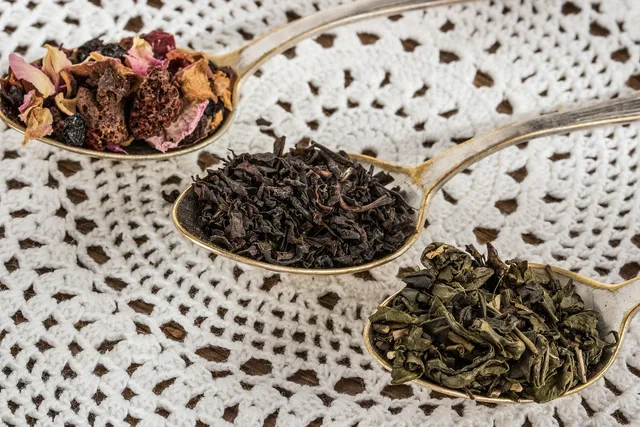
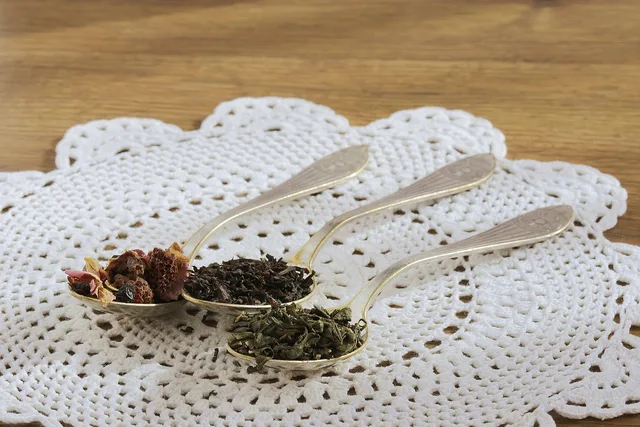
Dragon Well (Longjing) has flat, broad leaves and suits a roomy basket infuser or teapot. Bi Luo Chun curls tightly, while gunpowder green tea and rolled oolong are pellet- or ball-shaped; a gaiwan or small pot lets them unfurl over repeated short infusions. CTC Assam is made as small granules and suits a fine basket or teapot strainer when you want quick extraction.
Use the 3 g per 200 mL ratio below as a starting dose. Leave room in the infuser for whole leaves to expand; finer leaf needs prompt straining to avoid over-extraction.
One name covers a lot of ground
A single origin and style is not a single product. A 2026 study measured 32 Assam black teas from two regions, made by orthodox and CTC methods, using standardized ISO protocols.
It found total polyphenols from 83.54 to 184.52 mg/g and caffeine from 15.51 to 39.24 mg/g. Theaflavins ran 4.88 to 15.54 mg/g and theanine 2.47 to 8.16 mg/g. Orthodox and CTC gave comparable water extract and theanine levels.
Note the caffeine spread. That is a factor of two and a half within one growing area, measured in dry leaf before any of it reaches a cup. A single milligram figure for black tea is an average with a very wide distribution behind it.
Learn to think in grams per milliliter
Every dose here is a weight against a volume, which works because of a convenience most people never state: the density of water is roughly 1 gram per milliliter, varying with temperature and with anything dissolved in it.
Dose by Weight, Not Spoons
- 1 g/mLdensity of water
- 200 mLweighs about 200 g
- 3 gdose in 200 mL
- 1.5%leaf by weight
So 200 mL weighs about 200 g, and a 3 g dose is about 1.5 percent leaf by weight. Think in that ratio rather than in spoons and every recommendation becomes comparable, and scales to any pot you own.
The purchase that does not need repeating
- Buy 25 to 50 g of anything new, never 250.
- Confirm a harvest year before anything else.
- Ask for the grade or a photograph of the dry leaf.
- Match the shape to your brewing format.
- Buy from a seller who sells samples, and use them.
Two teas at 25 g teaches you more than one at 100 g, and costs about the same. How that leaf was made in the first place is set out in how independent makers produce loose leaf tea.
When to buy larger
Once you have drunk a tea for two months and know its numbers, buying a larger quantity is reasonable, with one condition: you can finish it inside about eight weeks, or you can store it properly. Keep it in an airtight, opaque container in a cool, dry place away from light, heat, moisture, and strong odors. The conditions for the second are in loose leaf tea storage rules that protect flavor.
Common questions
Is whole leaf always better than broken?
No. Broken leaf extracts faster and works well for iced tea, milk tea and anything on a schedule. Whole leaf is better when you want several steeps or a delicate cup.
How do I tell the grade by looking?
Whole leaf stays in larger intact pieces; broken leaf is made up of fragments, while fannings and dust are finer particles. On black-tea bags, OP (Orange Pekoe) and FTGFOP usually indicate whole-leaf grades, while BOP (Broken Orange Pekoe) indicates broken leaf. These labels are clues to size, not a universal quality scale, and grading conventions vary by tea.
Does a fancy name mean anything?
Style names describe processing and region. They do not describe grade, pick date, or storage, which is where most of the variation lives.
What if I already bought too much?
Split it into portions, seal them, and give away or drink the surplus early. The mistake compounds only if you leave the whole bag open.
In this guide
- Five stages, one dial: how loose leaf tea actually gets madeThe five stages of making loose leaf tea and what each one decides, including why moderate rolling pressure beats maximum and where aroma is lost.
- The short version of loose leaf tea storageLoose leaf tea storage: how to tell stale tea by smell rather than by date, why old liquor darkens, and the storage controls that matter ranked by how much they do.
- Four sessions, one ladder: tasting loose leaf tea properlyA four-session parameter ladder for learning one loose leaf tea properly, why temperature outruns time in the cup, and what to write down each time.
- Loose Leaf Tea Businesses: Water or Vessel First?For loose leaf tea businesses, assess water before choosing holding vessels. See how water, heat, service time, and labor shape a workable tea program.
- Aroma families compared: how to sort loose leaf tea before you pair itPairing ideas that: pair tea by aroma family rather than by instinct, use the empty cup to sort a tea, and treat aromatic congruence as a starting rule rather.