Reviews
Part of Loose leaf tea comparison: match shape to your brew
Aroma families compared: how to sort loose leaf tea before you pair it
Pairing ideas that: pair tea by aroma family rather than by instinct, use the empty cup to sort a tea, and treat aromatic congruence as a starting rule rather.
What to take away
- Matching a tea to a food by shared aroma is a testable idea, and it has been tested with tea specifically.
- In one study, aroma changed how sweet a cookie tasted even though the sugar content was identical.
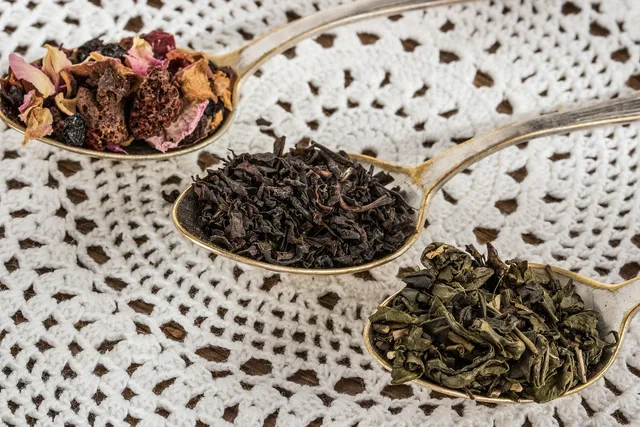
- Teas group into a small number of aromatic families, which makes pairing a matter of sorting rather than intuition.
- Congruent pairings were not automatically liked more, so use aroma matching as a starting rule, not a law.
The aromatic congruence idea
A study built tea and butter cookie pairings with and without aromatic congruence, confirmed the overlap by gas chromatography, and tested them with 89 consumers. Tea samples sorted into three aromatic groups, herbal, fruity-sweet and brown-sweet, harmony correlated positively with liking, and sweetness perception was significantly influenced by aroma although sugar content was identical across the cookies.
The same study is honest about the limits. All the pairings were similarly liked, and the congruent ones were not reliably better. Aroma matching is a good place to start and a bad place to stop.
Three families, and what sits in each
Teas
- Herbal and green
- Green tea, light oolong, white
- Fruity and floral
- Floral oolong, some black tea
- Brown and roasted
- Roasted oolong, dark tea, roasted green
Foods that sit near it
- Herbal and green
- Cucumber, rice, herbs, mild cheese
- Fruity and floral
- Stone fruit, berries, almond, vanilla
- Brown and roasted
- Toast, nuts, caramel, dark chocolate
Sort a tea into one of the three, then pick food from the same row. That is the whole method, and it works often enough to be worth using.
Three aroma families and pairings
Herbal and green
- Teas
- Green, light oolong, white
- Foods
- Cucumber, rice, herbs, mild cheese
Fruity and floral
- Teas
- Floral oolong, some black
- Foods
- Stone fruit, berries, almond, vanilla
Brown and roasted
- Teas
- Roasted oolong, dark, roasted green
- Foods
- Toast, nuts, caramel, dark chocolate
Use the empty cup to sort a tea
Sorting by dry leaf is a start, but the empty cup is better.
Research on Fenghuang Dancong oolong studied cup aroma, the scent left after the tea is drunk. It found it carried a different volatile profile from the infusion itself: 17 key odorants against 21 in the infusion, nectar and floral character; the liquid read as tropical fruit.
Finish a cup, wait a minute, then smell it. Naming what is there is easier with a fixed set of fifteen words than with a fresh adjective every time. What is left is concentrated and easy to name, and it is the cleanest read on which family a tea belongs to.
Aroma is doing the sweetening
Aroma changed reported sweetness in that pairing study with sugar held constant, so a pairing can make unsweetened tea taste rounder without adding anything.
Pairings for difficult teas
- Sharp grassy greenrice crackers or cucumber
- Harsh roasted oolongtoasted almonds or plain biscuit
- Drying young blackbuttered bread or mild cheese
- Muddy dark teadense fruit cake or dried dates
- Thin floral oolongnothing, use a smaller cup
A mint-scented food makes everything served with it read as less sweet.
In tea, the same effect has been measured: aroma raising sweetness by more than 24 percent in one infusion.
If a tea reads harsh, pair it with something in the same aromatic family that carries sweet aromatics. The tea will usually soften with no change to the brewing. The other half of pairing, the physical drying, is covered in pairing ideas that make tea collections easier to try.
Pairings that get a difficult tea drunk
- A grassy green tea you find sharprice crackers or cucumber.
- A roasted oolong you find harshtoasted almonds or a plain biscuit.
- A young black tea that dries the mouthbuttered bread or mild cheese.
- A dark tea you find muddydense fruit cake or dried dates.
- A floral oolong you find thinnothing at all, and a smaller cup.
Run it as a test, not as a rule
Take one tea you rejected. Brew it as before, then eat something from its aromatic family alongside. Rate it again, and if it improves, the tea was fine and the context was wrong, which is the most common reason a loose leaf purchase gets abandoned.
The structure to run it against is in a beginner guide to tasting loose leaf tea in 2027.
Common questions
Does pairing work with plain tea, or only sweet food?
Both. Savory pairing works well: green tea with rice and fish, roasted oolong with grilled vegetables.
Should the tea or the food lead?
Whichever you care about more. If the tea is the point, pick a quiet food. If the meal is, pick a tea that will not fight it.
Can I pair by taste instead of aroma?
You can, and it is blunter. Aroma carries more information and, as the research above shows, changes perceived sweetness directly.
Is there a pairing that never works?
Strong mint with anything delicate. It flattens sweetness across everything served with it and lingers for several courses.