Industry
Part of Tasting habits that change what you notice: kokumi and three temperatures
Tea tasting ideas brands can borrow for clearer tasting
Tea tasting ideas brands can borrow start with defined terms and reference samples. See how vocabulary can support product development and quality control.
What to take away
- Tea tasting ideas brands can borrow start with a defined vocabulary, not a company history.
- A sensory lexicon is a built object: a small trained panel agrees on terms, definitions and physical reference samples.
- One published tea lexicon runs to 37 attributes, split between flavor and aroma. That is the working size of a real vocabulary.
- Reference samples make a word mean the same thing twice. Without them, tasting notes are private.
Why the story here is the language, not a company
A sensory lexicon is not a company origin story. It is a method for making tasting language consistent: published lexicons can document terms, panel methods and reference standards. That makes the method useful to tea professionals and curious tasters, even when it does not establish who first used a particular tasting word.
How a lexicon actually gets built
A sensory lexicon is a standardized vocabulary developed by trained panelists to describe what is present in a product. A review of the practice describes lexicons across food categories and their use in product development, quality control and shelf life measurement, which is what they exist for: making one person's description usable by another.
How a Lexicon Is Built
- Panel tastes many samples
- Generates candidate terms
- Argues terms down to a set
- Writes a definition per term
- Attaches a physical reference
The build process is unglamorous. A panel tastes many samples, generates terms, argues them down to a set, writes a definition for each, and attaches a physical reference so the term can be calibrated. The output is a list, a definition and a jar.
The size of a real tea vocabulary
One published lexicon for fermented and blended tea gives a concrete example. Six highly trained panelists identified, defined and referenced 37 sensory attributes, split into 24 flavor and 13 aroma terms.
Blends contained rose, lavender, hibiscus, chamomile and peppermint. They contained lemongrass, rosemary and osmanthus.
Terms included brown, spicy, cooling, earthy and nutty. Sweet and bitter came from the tea itself.
Two things follow: first, thirty-something terms describe a whole category, so a personal vocabulary of ten to fifteen is plenty.
The lexicon does not show which descriptors customers understand, so a brand should not treat its terms as tested package or menu copy. Its practical use is internal consistency: product-development and quality-control staff can use the same defined terms and reference samples when describing teas or comparing formulations.
To adapt the vocabulary for customers, select only terms that accurately describe the tea and explain them in plain language on packaging or a menu. In staff training, have people compare the tea with the physical reference before using a descriptor. These are applications of the method, not customer-tested wording: a sensory lexicon records trained-panel descriptions, not what shoppers prefer or understand.
Borrowing the method without the panel
| Lexicon practice | Home version |
|---|---|
| Written definition per term | One line in a notebook, fixed |
| Physical reference sample | A jar of the actual thing you mean |
| Fixed intensity scale | 0 to 5, same every time |
| Panel calibration | Retaste your reference before a session |
| Small closed term set | Fifteen words, no additions mid-session |
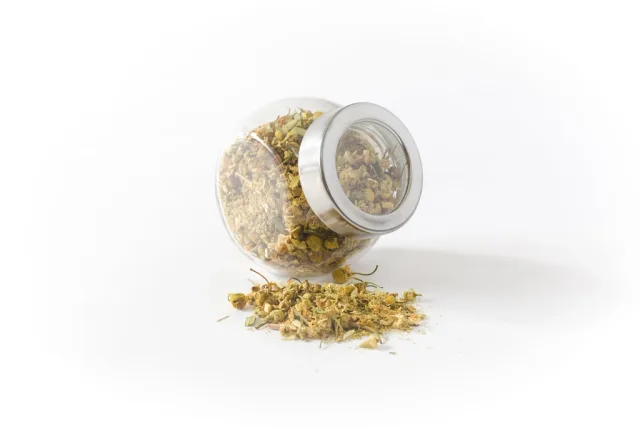
The reference jar is the part people skip and the part that does most of the work. If you write malty, keep malt extract in the cupboard and smell it. If you write hay, keep dried grass. Your notes then mean something in a year.
Lexicon Practice vs Home Version
Lexicon practice
- Definition
- Written per term
- Reference
- Physical sample
- Intensity
- Fixed scale
- Calibration
- Panel calibration
- Term set
- Small closed set
Home version
- Definition
- One fixed notebook line
- Reference
- Jar of the actual thing
- Intensity
- 0 to 5, same every time
- Calibration
- Retaste reference before session
- Term set
- Fifteen words, no additions
Where the vocabulary breaks down
Terms borrowed from wine travel badly. Minerality has no agreed definition in either field. Terroir describes a claim about cause, not a sensation, so it cannot be scored.
Growing conditions and sensory description answer different questions. Keep claims about a season's effects on the leaf separate from the words that describe what you taste. Also separate a tea's sensory properties from how it makes you feel, because the two are easily confused.
Keep descriptive terms, intensity ratings and preference apart. In a tasting flight, record what you sense separately from how strong it is and whether you like it. That structure keeps a sensory description from turning into a judgment of quality.
Common questions
Do I need to use official terms?
No. You need stable ones. A private word used consistently beats a standard word used loosely.
Why do published lexicons include plain words like sweet and brown?
Because they are unambiguous. Panels drop clever terms during training precisely because people cannot agree on them.
How many terms should I keep?
Ten to fifteen, each with a definition and, where possible, a reference. Add a term only when an existing one repeatedly fails.
Is a flavor wheel the same as a lexicon?
No. A wheel organizes terms visually. A lexicon defines them and attaches references. The definitions are the useful part.