Reviews
Part of Are three clocks really running at once during tea brewing methods
The package format decides tea brewing methods before any label does
The format a tea is sold in decides the brewing method before any instruction does, and bag design changes how fast the leaf gives anything up.
What to take away
- The format a tea is sold in decides most of the brewing method before you read a single instruction.
- Loose tea swells and infuses faster and further than the same tea in a bag, and that has been measured.
- Bag design matterschamber count, fill level and how much leaf is packed in all change the extraction rate.
- Read the format, the particle size and the net weight per serving. Those three predict the method better than the words do.
The format is the instruction
Before any printed advice, the package already decides for you. A pyramid sachet assumes one steep in a mug. A compressed cake assumes a knife and multiple short infusions. A tin of fine powder assumes a whisk and no straining.
Format decides brewing method
Paper bag
- Assumed method
- One steep
- Rules out
- Resteeping
Pyramid sachet
- Assumed method
- One or two steeps
- Rules out
- Dose adjustment
Loose leaf
- Assumed method
- Any method
- Rules out
- Nothing
Cake or powder
- Assumed method
- Short steeps; whisked
- Rules out
- Casual cups; straining
Matcha is graded for exactly that, on color, texture and flavor for whisking rather than on assay values. Fighting the format rarely works.
Method it assumes
- Flat paper bag
- One steep, boiling water
- Pyramid sachet
- One or two steeps in a mug
- Loose whole leaf
- Any method you like
- Compressed cake or brick
- Break, rinse, short steeps
- Powder
- Whisked, suspended
What it rules out
- Flat paper bag
- Resteeping, dose control
- Pyramid sachet
- Fine dose adjustment
- Loose whole leaf
- Nothing
- Compressed cake or brick
- Casual single cups
- Powder
- Straining, resteeping
Bags are slower, and the design changes how much slower
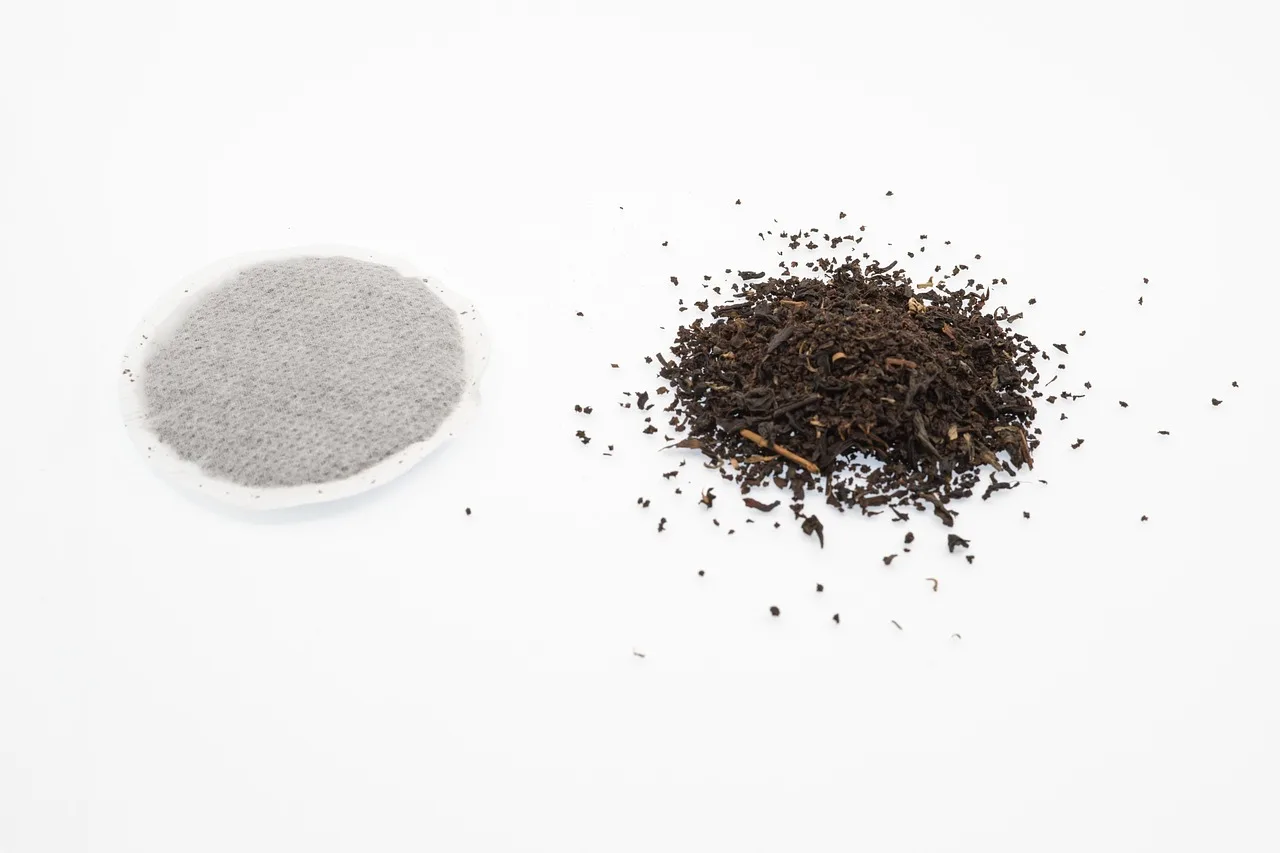
The difference between a bag and loose leaf is not only quality, it is kinetics. A study of swelling and infusion in tea bags compared bag designs against loose tea and found that loose tea swelling and infusion was always faster and higher than in tea bags.
Bag design changes infusion speed
- Double-chambered bag30% swelling
- Loose leaffaster, higher
- Single-chambered baglowest
- More leaf per bagslower
The same study found a double-chambered bag reached the highest swelling at 30 percent and the highest infusion kinetics, single-chambered bags were lowest, and packing more leaf into a bag reduced the infusion rate.
That last finding is the useful one. A well-filled bag is not generous; it is slow, because the leaf has nowhere to expand.
Across six teas, loose leaf gave up more than bags did at the same brewing time. That also explains why dunking helps: the study found dipping frequency raised infusion kinetics.
What the format is really controlling
Underneath all of this is one process: water pulling things out of leaf. Water manages that because it dissolves more substances than any other liquid, a consequence of the polar arrangement of its oxygen and hydrogen atoms, which lets it pull apart and surround the compounds it meets.
Everything a package format does is regulate that contact. A sealed bag limits how much leaf surface the water reaches. A compressed cake delays it. Loose leaf removes the restriction entirely. Read the format as a decision about contact, and the brewing line becomes easier to argue with.
Reading a package for method rather than for marketing
- Particle size, from the window or a photograph. Fine means fast and once.
- Net weight per sachet. Under 2 g is dosed for a small mug, not a pot.
- Whether the bag has one chamber or two.
- Whether the tea is compressed, and how tightly.
- Whether resteeping is mentioned at all, which tells you what the seller expects.
If the format says one thing and the printed advice says another, believe the format. The purchase decision that sits behind all of this is in how to choose loose leaf tea without buying twice, and what happens inside the vessel once you commit is in what happens during a typical tea brewing methods project.
Common questions
Are pyramid sachets as good as loose leaf?
Better than flat bags, and still slower than loose leaf, because the leaf is enclosed. Their real advantage is consistent dosing.
Should I squeeze a tea bag?
It pushes out concentrated liquid from the leaf, which is usually the harshest part. Lift it out instead, or accept the extra bite.
Can I open a sachet and use the leaf loose?
Yes, and it will brew faster and fuller. It also removes the only advantage the sachet had, which was portion control.
Why do compressed teas need a rinse?
Because the leaf is packed tight and has to open before anything useful comes out. The rinse starts that expansion rather than cleaning anything.