Reviews
Part of Are three clocks really running at once during tea brewing methods
A kitchen checklist to use with tea brewing methods reviews
Use this kitchen checklist alongside tea brewing methods reviews: assess water, temperature control, timing, and vessels before choosing a tea subscription.
What to take away
- Use this checklist alongside tea brewing methods reviewsassess whether your setup can brew what a subscription sends.
- A box that mixes green tea, oolong and herbal infusions needs at least two water temperatures.
- Your water is the constant across everything in the box, and the bicarbonate in it has a measured effect on aroma.
- Before subscribing, check four thingstemperature control, a scale, a way to time it, and a vessel you can pour off cleanly.
Why there is no ranked list
The contents of a subscription change every month, so any ranking is a review of one shipment that will never ship again. What does not change is the demand a box places on your kitchen. That is assessable now, and it is the part that decides whether the tea arrives in good condition and then gets brewed badly.
The equipment floor
Why it matters
- Temperature control
- Green and white tea need under boiling
- Scale to 0.1 g
- Leaf shapes vary threefold by volume
- Timer
- Two minutes and five are different teas
- Pour-off vessel
- Stops the steep cleanly
- Two vessels
- Lets you compare
Acceptable substitute
- Temperature control
- Boil, then rest two minutes
- Scale to 0.1 g
- None that works
- Timer
- Phone
- Pour-off vessel
- Any second cup
- Two vessels
- Two identical mugs
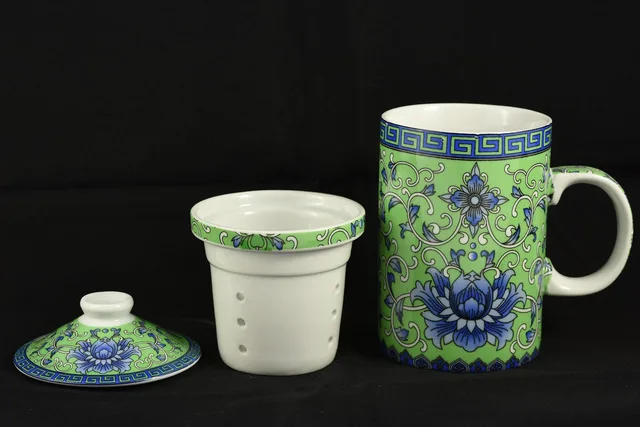
Everything else is optional. A box that requires more than this is selling gear, not tea. Check the packaging before opening a box: it can tell you which brewing method the tea assumes. See what tea packaging can tell you about brewing methods.
The equipment floor
- Temperature controlunder boiling for green and white
- Scale to 0.1 gleaf volume varies threefold
- Timertwo minutes and five are different teas
- Pour-off vesselstops the steep cleanly
- Two vesselslets you compare side by side
Your water is the constant, so test it first
Every tea in the box brews in the same water, so water problems look like tea problems.
What to test in your water
Well owners (annual)
- Bacteria
- Test annually
- Nitrates
- Test annually
- Total dissolved solids
- Test annually
- pH
- Test annually
- Hardness
- Not listed
- Iron, manganese, sodium, sulfate
- Not listed
Fuller panel
- Bacteria
- Not listed
- Nitrates
- Not listed
- Total dissolved solids
- Not listed
- pH
- Not listed
- Hardness
- Covered
- Iron, manganese, sodium, sulfate
- Covered
A bicarbonate brewing-water study found that as hydrogen carbonate concentration rose, the purity of tea aroma diminished, cooked and sweet attributes intensified. The effect was strongest at high temperature and long brewing. It also found measurable drops in dimethyl sulfide and beta-ionone, and a shift from EGCG to GCG in the infusion.
If you want to know what you are actually brewing with, the parameters are standard. Clemson's guidance for well owners lists annual testing for bacteria, nitrates, total dissolved solids and pH, with a fuller panel covering hardness, iron, manganese, sodium and sulfate among others. Public supplies publish much of this already in an annual report.
You do not need a lab. Once you know, scale ranges from a whole-house system to a point-of-use unit at the tap.
Find hardness and total dissolved solids figures for your supply, write them down, and brew a familiar tea in your tap water and one bottled water side by side before the first box arrives.
What a box asks of you in time
Working through a box properly is three or four sessions a week, not a monthly afternoon. Each tea wants one careful brew at the suggested settings and one at your own. If that is more time than you have, boxes accumulate unopened, which is the most common way subscriptions fail.
For a separate discussion of portion sizes, dating, and terms in subscription boxes, see tea tasting ideas for subscription boxes.
Before you subscribe
- Does the box include teas needing different water temperatures?
- Does it include compressed tea, which needs a knife and a rinse?
- Does it include powdered tea, which needs a whisk?
- Are brewing parameters given per item, or one generic line for everything?
- Can you skip a month when you have not finished the last one?
For more on what brewing parameters do to the leaf, see what happens during a typical tea brewing methods project.
Before you subscribe
- Does the box include teas needing different water temperatures?
- Does it include compressed tea, which needs a knife and a rinse?
- Does it include powdered tea, which needs a whisk?
- Are brewing parameters given per item, or one generic line?
- Can you skip a month when you have not finished the last one?
Common questions
Do I need a special kettle?
Not necessarily. Boiling water rested for two minutes in an open vessel lands near 90 C in most kitchens, and near 80 C after four. Measure yours once and write the numbers down.
Should I filter my water?
Test before deciding. Filtering changes mineral content, and the research above shows the direction of that change is not always an improvement.
What if a tea arrives that I cannot brew properly?
Set it aside rather than brewing it badly. A first impression made with the wrong method is worse than no impression.
Are gear subscriptions worth it?
Rarely. Most tea equipment is bought once. A monthly delivery of it is a solution to a problem few drinkers have.