Reviews
Part of One plant, six processing routes: a field guide to specialty tea
Stock specialty tea by lot code and fade curve, not by brand trust
How to stock specialty tea: lot codes, turnover targets built on published shelf-life data, the supplier paperwork to request, and floor storage.
What to take away
- Tea does not spoil on a shelf so much as fade, which means date codes matter more than expiration language.
- Published shelf-life work suggests the first three to four months are the flat part of the curve, and the drop steepens after six.
- Print a packed-on date. The common date terms are about quality, not safety, and none of them fits dry tea.
- Bulk bins, sample tins and open display are where most of a shop's flavor loss happens, and they are the cheapest thing to fix.
Buy on lot codes, not on brand trust
Every purchase order should tie to a lot: the garden or factory, harvest date, and a code the supplier can trace. Without that, a complaint about one tin has no path back.
Request this paperwork from every supplier:
Buy on lot codes
- Lot code that traces to the garden or factory.
- Harvest date, with month and year.
- Garden or factory name.
- Storage conditions from packing to delivery, including temperature and humidity.
Ask for the code on the invoice, not just the pouch, because pouches get decanted and the code goes with them. Origin, cultivar and pick season predict the cup, which the 2027 field guide to specialty tea for beginners covers.
Set turnover targets from the fade curve, not from a guess
A one-year study tracked four processed tea types periodically under commercial storage. Antioxidant activity broadly held for the first 90 to 120 days and then began to decline.
Loss accelerated past 180 days; 60 to 75 percent of initial activity gone by 330 days. These are lab assays on stored packets, not a rule for how a given tea tastes.
What fade tastes like depends on the tea: top notes go first, then the base turns flat, which loose leaf tea storage rules that protect flavor covers.
Practical version for a shop:
Set turnover targets
| Age since packing | What to do |
|---|---|
| 0 to 3 months | Full price. Keep on the main shelf. |
| 3 to 6 months | Full price, moved to the front. Check the seal. |
| 6 to 8 months | First markdown, typically 15 to 25 percent, or blend into a house blend. |
| 8 to 12 months | Second markdown, typically 30 to 50 percent, or move to iced tea and cooking. |
| Over 12 months | Pull from sale. Use for staff tasting or compost. |
Turnover targets by tea age
- 0 to 4 monthsFull price, front of shelf
- 4 to 8 monthsPush through sampling and blends
- 8 to 12 monthsDiscount or move to iced and batch programs
- Past 12 monthsDo not restock the same volume
Typical trade targets, not lab limits, run:
Fade curve by tea type
- Green tea
- 4 to 6 months.
- White tea
- 6 to 9 months.
- Oolong
- 6 to 12 months.
- Black tea
- 8 to 12 months.
- Pu-erh and aged teas
- years, if stored well.
Print a date the customer can actually use
Food dating lacks a uniform system in the United States, and the terms do not mean what shoppers assume; Alabama's extension service sets out vocabulary.
A sell-by date tells the store how long to display the product. A best-by date is about quality, not safety, and a use-by date is the manufacturer's judgment of peak quality, not a safety date.
For dry tea, which does not become unsafe on a shelf, all three are the wrong instrument. Print a packed-on date. It is the only one that tells a customer how long ago this leaf was sealed.
Storage on the sales floor
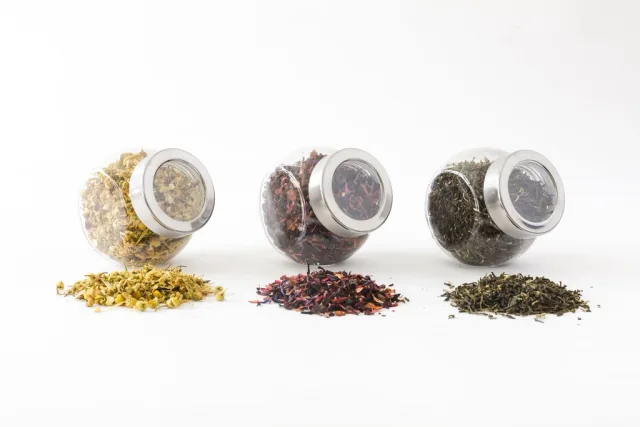
- Keep working stock in opaque, airtight containers and the reserve in its original sealed foil.
- Keep tea away from spices, coffee and cleaning supplies. Dry leaf takes on odors readily.
- Sample tins are the fastest to go flat. Refill them in small amounts and date them.
- Never store above a dishwasher, an oven, or in direct sun through a storefront window.
- Log the date a bulk container was opened, on the container.
Price it so the customer can compare
Post price per gram alongside the tin price. It costs nothing, it makes a 25 g tin comparable to a 100 g pouch, and it removes the most common source of buyer regret. Buyers compare price per gram and check the harvest date, which specialty tea trends that buyers may notice in 2027 covers.
Common questions
Should I put a use-by date on repacked tea?
No. A use-by date implies a safety cliff that dry tea does not have, and it invites returns on tea that is merely older.
How much should a shop carry?
Enough to turn each item within about eight months. Depth in a few well-understood teas beats breadth that ages out.
Is refrigeration worth it?
Only for sealed, unopened green tea held long term, and only if it comes back to room temperature before opening. Otherwise condensation does more harm than the cold prevents.
What do customers complain about most?
Flat aroma from tea kept too long in an open display, and bitterness from brewing instructions that do not match the leaf. Both are fixable in the shop.