Industry
How American tea brands actually grow, and the research station behind most of it
No producers are ranked here. Where tea can be grown in the United States, how many farms there are, and the single South Carolina station behind most of it.
What to take away
- Tea is grown commercially in the United States on more than 60 farms across 17 states. The growing range runs from USDA hardiness zone 7 to zone 10, with heavy rainfall, according to the trade bodies cited in the research literature.
- Producers and brands are named below as examples, not ranked, because the domestic industry is small and changes fast enough that a list would mislead.
- Most US commercial plants trace back to a single nineteenth-century USDA experiment station in South Carolina.
What a brand list would miss
Domestic tea growing is a young industry with few producers, many working a few acres, so a ranked list built today would be inaccurate within a season. The same refusal applied to brewing methods gives you dated evidence instead of a company history, and what follows is the industry's shape and criteria you can apply yourself.
How to find current producers
Start with the two US grower trade bodies: the American Specialty Tea Alliance and the US League of Tea Growers. Ask each which farms are current members, because rosters change as farms start and stop.
State university extension programs in the South and in Hawaii also track specialty crop growers. A farm that names its cultivar, acreage and processing steps tells you more than any ranking.
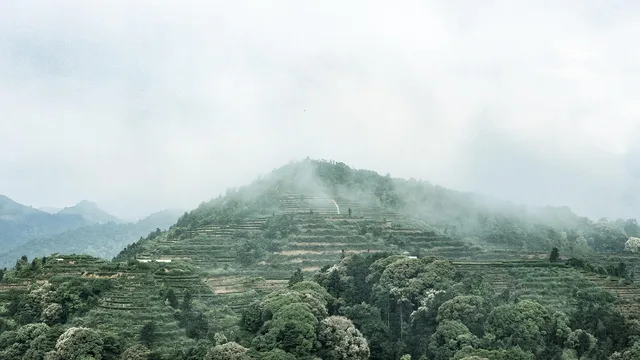
Where tea can actually grow here
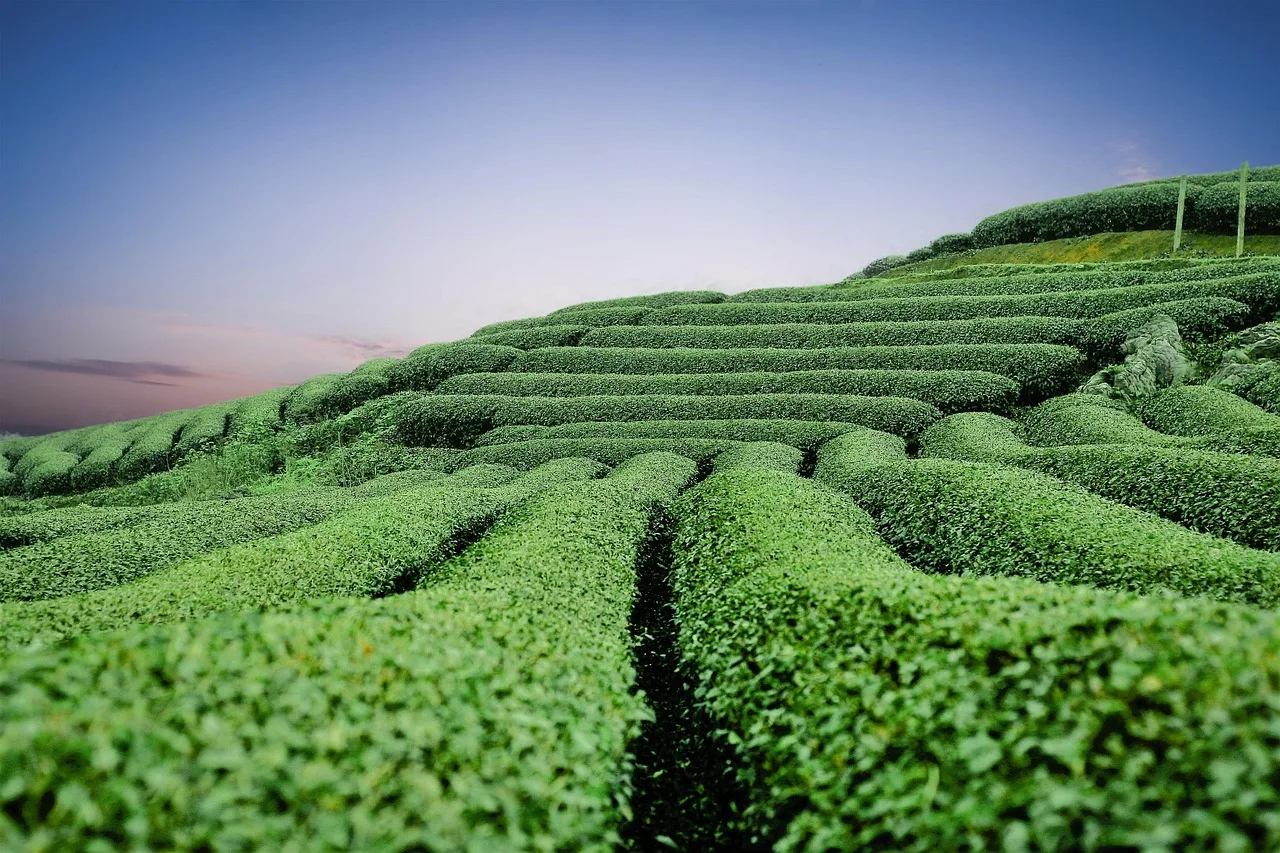
A 2022 review of United States tea research and production sets the boundaries plainly. Tea can be grown in USDA hardiness zones 7, 8, 9 and 10, with temperatures in the 21 to 29 C range and rainfall of 150 to 250 cm per year. Shoot growth and new flushes fall off below about 13 C.
US tea growing by the numbers
- 60+farms in the US
- 17states with tea production
- 7-10USDA hardiness zones
- 150-250 cmannual rainfall needed
The same review reports tea production on more than 60 farms across 17 states, citing the American Specialty Tea Alliance and the US League of Tea Growers. Scale sets what a US garden can afford, which is why smallholders are priced out of precision tools.
It also traces the ancestry. Congressional appropriations of $5,000 and $10,000 in 1880 and 1881 funded a USDA research station at Summerville, South Carolina. It became the Pinehurst Tea Farm in 1890 when Charles Shepard bought it, and most commercially grown US tea descends from that station's material.
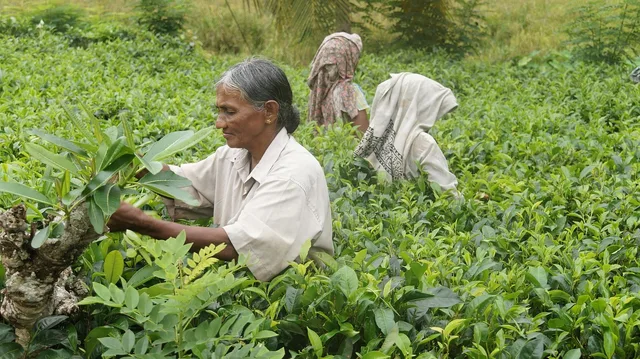
That line reaches the present. Charleston Tea Garden on Wadmalaw Island, South Carolina grows, harvests and processes on site. Hawaii holds a smaller group of commercial gardens, mainly on Hawaii Island and Maui.
Other named examples include Big Island Tea, Mauna Kea Tea, Onomea Tea Company and Tea Hawaii & Company in Hawaii, the Great Mississippi Tea Company in Mississippi, Table Rock Tea Company in South Carolina, and Minto Island Tea in Oregon.
Reported planted area varies widely, often under 20 acres, with the largest US tea garden at about 127 acres total. Public planted-acre figures are often not published, so treat any number as a snapshot.
Cold is the binding constraint
The zone limits are not arbitrary. Tea buds acclimate and deacclimate to cold across a season. Modeling work on two cultivars, using ten years of observed data, found that a model incorporating both recent and longer-term temperature memory captured more than 90 percent of the observed variation in cold-hardiness, with errors around 1 C.
What this means for a buyer: a farm's cold risk rests on its own weather record, not just its zone number.
For a grower in Georgia or Oregon, that is the whole problem in one sentence. Hardiness is not a fixed number for a cultivar. It depends on what the weather has been doing for weeks beforehand, which is why a mild winter followed by a late freeze does more damage than a consistently cold one.
What to ask a domestic producer
| Question | Why it matters |
|---|---|
| What cultivar, and where from | Most trace to one narrow genetic base |
| How many pounds finished per year | Tells you the real scale |
| Grown and processed on site? | Some grow, some buy and process |
| Which styles, and since when | Consistency takes several seasons |
| Harvest dates on the pack | The whole point of buying local |
How to judge without a ranking
Buy small, taste it against an imported tea of the same style and parameters, and repeat the following year. Domestic tea often costs more than imports of comparable style, and the honest question is whether the cup justifies the price for you.
The comparison method is set out in how to choose loose leaf tea without buying twice. The category background is in the 2027 field guide to specialty tea for beginners.
Common questions
Is US-grown tea good?
Some of it is very good and some is early work by people still learning their site. The variation between producers is much larger than in established regions.
Why is it so expensive?
Small plots, US labor costs, hand picking, and low yields per acre. The price reflects real costs rather than a premium for novelty.
Can I grow tea in my yard?
In zones 7 to 10, plausibly. Getting from a living plant to drinkable tea is a separate skill involving withering, rolling and firing.
Where else in the West is tea grown?
Several European gardens now produce commercially at small scale, and their published analyses are a useful parallel for what young non-traditional origins produce.
In this guide
- One small garden, one dial: how American tea brands actually get madeAmerican tea makers at garden scale: a small domestic garden does the whole chain itself, what that scale can produce, and how withering shapes a white tea.
- Tea storage in humid American climates: why sealed beats open, and how to test dry leafHumidity is the storage problem in most US tea growing regions, why sealed beats open, which category is risky, and how to tell if leaf has taken up moisture.
- Brew the import identically: how to taste American tea brands fairlyBeginner guide to tasting US-grown tea in 2027: how to taste domestic tea fairly, an imported reference brewed identically, and why more measured polyphenol content.
- Why American tea brands work better as a special than a fixed listWhat US-grown tea has: domestic origin is something a customer cannot taste, and supply rarely lasts a year. How to run US-grown tea as a special rather than a list.
- Show, don't disguise: pairing American tea brands while they're youngPairing young American tea brands means choosing quiet food like buttered toast that lets aroma and lighter body read clearly instead of covering the cup.